| Editor's choice |
Notes to Exchange 2010 Migration
Export Notes Tool to Move NSF to PST and Notes to Exchange 2010 Migration
Maple Reader
The free viewing companion to Crystal Office Maple.
DWG2ZIP
DWG2ZIP is a program for distributing and archiving AutoCAD DWG files. The p...
Magic Basket
Magic Basket is an useful and comfortable assistant for Windows Explorer.
EDB 2 PST Converter Free tool
Recover Exchange EDB file and convert EDB 2 PST by EDB 2 PST Converter tool
NavTools Route
Complete voyageplanning utility for ocean voyages, calculates optimum engine rpm
Combine PST
SysTools PST Merge Software to combine single or multiple MS Outlook .PST file
|
|
Recieve software tool rapidly and handy. SoftEmpire is happy to demonstrate a handy diversity of the splendid free programs, tools, and software solutions. On this catalog you may download demo updates of favorite paid programs, and setup the greatest free programs for your computer or mobile appliance,gadget. Search an excellent collection of exclusive new software programs on our library! Acquire demo editions and try fresh apps on your computer or digital device. Check out the fresh editions and updates of classical program, advanced programs, and PC utilities! Obtain today!
Download free utility software from the widely known Internet storage!
System software designed to help analyse, configure, improve, and maintain the computer.
Hard drive utility tools for laptop health and PC wealth.
Windows utility software tool accumulation to value, organize, and perfect the working of the computer.
|
EASEUS Linux File Recovery
|
|
Download
|
Buy now!
|
View screenshots
|
Vendor Price: $ 29.95
License: Demo
File Size: 5.89 Mb
Version: 2.1.1
Release Date:
25 Mar 2008
OS: Windows2000, WinXP, Windows2003, Windows Vista Starter, Windows Vista Home Basic, Windows Vista Home Premium, Windows Vista Business, Windows Vista Enterprise, Windows Vista Ultimate, Windows Vista Home Basic x64, Windows Vista Home Premium x64, Windows Vista Busine
System Requirements:
PC-compatible computer with Pentium or similar CPU
Company: YIWO Tech Ltd
|
|
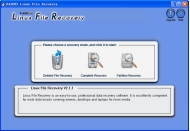
EASEUS Linux File Recovery is a fast and secure Linux data recovery tool dedicated in Ext2 and Ext3 file system recovery. It can recover your valuable data with its three function modules: Delete File Recovery, Complete Recovery, and Partition Recovery to retrieve your lost data from any kind of data disaster.
Key Features:
- Recovers loss data in EXT2 and EXT3 file system.
- Recovers corrupt Ext2 and Ext3 partition.
- Creates a Disk Image file for data recovery.
- Intelligent search all possible file systems on hard drive.
- Ability to resume the last recovery result.
- High quality of file recovery.
- Succinct and user friendly interface.
- Recovers a specific file by right-click.
- Enhanced support Windows Vista.
EASEUS Linux File Recovery is an automatic Linux data recovery software for Ext2 and Ext3 file system volumes. It fully supports Linux data recovery from Ext2, Ext3 file system based Linux operating systems, such as Red Hat, Mandrake, Turbo, SuSe, Debian, Ubuntu, SCO. It automatically recognizes lost partition, volumes, files and folders and recovers Linux files from corrupt, lost, damaged or crashed hard drives.
Check out: To learn about recovering MySQL, please see this page.
|
More to download:
Better File Rename
Better File Rename 5 is a comprehensive batch file renamer that transforms the tedious and time-consuming task of changing multiple file names into a simple matter of seconds.
Simpli-File Split and Merge
Need to organize files? Do you have lists that you need to split up or many files that you want to put into one? This might be the perfect program for you. Simpli-File Split & Merge is the easiest way to split or merge as many files as you need t
|
|
|
Windows Backup |
Looking for backup software? Try Handy Backup - automatic data backup to DVD, CD, FTP, network, or Online. Client-server enterprise backup software.
|
|
Top Downloads |
Download, save and convert Redtube videos ( redtube.com ) to your PC
PhotoScape is an all-in-one style photo editor with fun and ease of use.
Convert any format video files with fast speed and excellent video quality.
|
|